
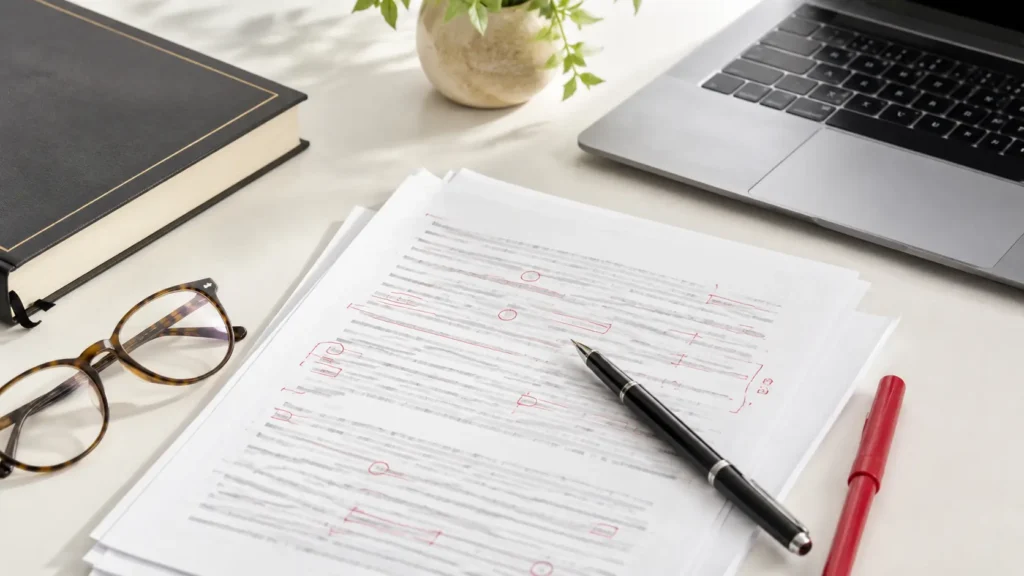
Many authors send their first draft to a professional editor, hoping for a quick polish. The result is often disappointment, extra costs, and a much longer revision cycle than expected. If you want your novel to stand out and avoid unnecessary rewrites, self-editing is a step you cannot skip. A manuscript that has been carefully revised by its author is easier for editors to work with, leading to a smoother editing process, clearer feedback, and a stronger final book.
Why Self-Editing Matters in the Novel Revision Process
Professional editors expect a manuscript that has already gone through some level of author revision. When you self-edit, you catch issues that only you, as the creator, can truly spot: inconsistent character motivations, missing scenes, or plot holes. Editors can then focus on higher-level improvements instead of spending time on basic errors. This preparation saves you money, shortens the editing timeline, and helps you learn more about your own writing habits.
What Self-Editing Is (and What It Isn’t)
Self-editing is not just running a spellcheck. It is a careful review of your story, structure, characters, pacing, and language. You are not expected to make your manuscript perfect, but you should aim to present your best possible draft. Self-editing does not replace professional editing – it prepares your work for it.
Benefits of Self-Editing Before Professional Editing
- Cost savings: Editors often charge by the hour or word. Cleaner manuscripts take less time to edit.
- Clearer feedback: Editors can focus on deeper issues instead of surface-level mistakes.
- Faster turnaround: Fewer errors mean less back-and-forth and a quicker path to publication.
- Skill development: Each round of self-editing teaches you more about your strengths and weaknesses as a writer.
- Greater confidence: Knowing you have done your best work makes the editing process less stressful.
Self-Editing Tips for Novel Writers: A Step-by-Step Approach
Every writer’s process is unique, but the following steps can help you strengthen your novel before sending it to a professional editor.
1. Take a Break Before Revising
After finishing your first draft, set it aside for at least a week. This distance allows you to see your work with fresh eyes, making it easier to spot inconsistencies and weak spots.
2. Read Your Manuscript Aloud
Reading aloud helps you catch awkward phrasing, unnatural dialogue, and sentences that do not flow. You may notice pacing problems or repetitive language that you missed while reading silently.
3. Focus on Big-Picture Elements First
- Plot consistency: Are there plot holes or unresolved storylines?
- Character development: Do your characters grow and change? Are their motivations clear?
- Structure: Does the story have a clear beginning, middle, and end?
- Pacing: Are there sections that drag or move too quickly?
Make notes as you read and address these major issues before moving on to smaller details.
4. Trim Unnecessary Words and Scenes
Look for scenes that do not advance the plot or reveal character. Cut or combine them. On a sentence level, remove filler words, redundancies, and passive voice where possible. Each word should earn its place.
5. Strengthen Dialogue
Dialogue should sound natural and serve a purpose. Remove small talk and lines that do not reveal character or move the story forward. Read conversations aloud to check for authenticity.
6. Check for Consistency
Keep track of character names, physical descriptions, timelines, and settings. Inconsistencies can confuse readers and create extra work for your editor. Create a style sheet or reference document to track these details.
7. Polish Your Prose
Once the big-picture elements are solid, focus on your language. Look for repeated words, clichés, and awkward sentences. Replace vague descriptions with specific, vivid details. Vary your sentence structure to keep the writing lively.
8. Proofread for Grammar and Spelling
Run a spellcheck, but do not rely on it alone. Read carefully for homophones, missing words, and punctuation errors. Consider reading backward, sentence by sentence, to catch typos.
9. Get Feedback from Beta Readers
Trusted beta readers can offer fresh perspectives on your story. Ask them for honest feedback about plot, characters, pacing, and clarity. Use their insights to make final adjustments before professional editing.
Common Self-Editing Mistakes to Avoid
- Editing while writing: Try to finish your draft before revising. Constant editing can stall your progress.
- Focusing only on grammar: Big-picture issues matter more at this stage than perfect punctuation.
- Ignoring feedback: If multiple readers mention the same issue, it likely needs attention.
- Trying to make it perfect: Aim for your best draft, not perfection. Leave some work for your editor.
How Self-Editing Prepares You for Professional Book Editing Services
Editors appreciate authors who have invested time in the manuscript self-editing stage. A well-prepared draft allows editors to focus on developmental editing, line editing, or copy editing, depending on your needs. This preparation also helps you understand the editing process, making it easier to communicate your goals and expectations.
If you plan to use book editing services, consider including a note about your revision process and any areas where you want targeted feedback. Editors value transparency and collaboration.
Checklist: Preparing Your Novel for a Professional Editor
- Take a break after finishing your draft
- Read your manuscript aloud
- Revise for plot, character, and structure
- Trim unnecessary scenes and words
- Strengthen dialogue and prose
- Check for consistency in names, settings, and timelines
- Proofread for grammar and spelling
- Gather feedback from beta readers
- Prepare a style sheet or reference document
- Make a list of questions or concerns for your editor
How Much Self-Editing Is Enough?
There is no fixed number of drafts or revisions. Some authors revise a handful of times, while others go through dozens of drafts. The goal is to reach a point where you cannot find any more major issues and your beta readers are not flagging the same problems. At that stage, your manuscript is ready for professional eyes.
How Self-Editing Shapes Your Growth as a Writer
Each round of self-editing is a chance to learn about your strengths and recurring challenges. Over time, you will spot patterns: maybe your dialogue tends to be stiff, or your pacing lags in the middle chapters. Awareness of these habits helps you address them earlier in future projects, making you a stronger and more efficient writer.
Conclusion: Give Your Novel Its Best Start
Self-editing is not just about catching typos or trimming word count. It is about taking ownership of your story and respecting your future editor’s time and expertise. A well-revised manuscript leads to a more productive partnership with your editor and a stronger finished book. If you are ready for the next stage, consider reaching out for professional book editing services to give your novel the expert attention it deserves.
FAQs
How many rounds of self-editing should I do before hiring a professional editor?
Most authors go through at least two or three rounds of self-editing. Revise until you stop finding major issues and your beta readers are mostly satisfied.
Can self-editing replace professional editing?
No. Self-editing helps you catch obvious problems, but a professional editor brings objectivity, experience, and technical skill that you cannot provide yourself.
What is the difference between self-editing and proofreading?
Self-editing covers big-picture elements like plot, character, and pacing, as well as style and grammar. Proofreading is the final check for typos and minor errors before publication.
Should I hire a developmental editor or copy editor first?
If your manuscript needs work on structure, plot, or character, start with a developmental editor. If the story is solid and you need sentence-level polishing, a copy editor is the next step.